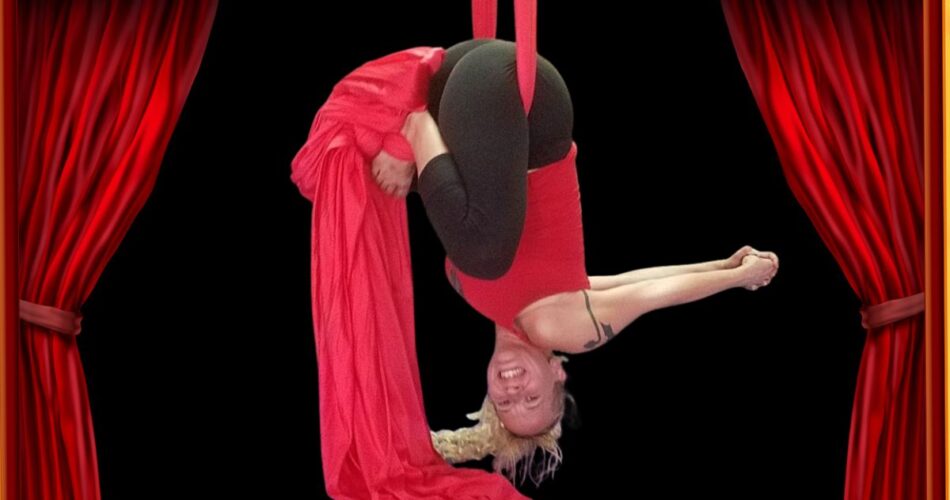
If you’ve spent any time on my social media, you’ve probably seen the comments. “You belong in the circus”, “Freak!”, or the classic “How does a body even do that?”
I take it as the ultimate compliment.
When people call me a freak, they’re seeing the end result of years of hard work and dedication. The deep splits, the inverted aerial silk holds, and the muscle control are all facets of my freaky world
In this article:
Daisy Chain’s Circus Skills
My circus freak skills include physical feats in silk aerials, contortion, and pectoral muscle control. However, a true circus performer understands that the art is in the performance. So, I integrate alluring cosplay, classic country and rock tunes, and humor. The result is a stunning spectacle that makes my audience “ooh”, “ah”, and roll over with laughter.
Silk Aerials
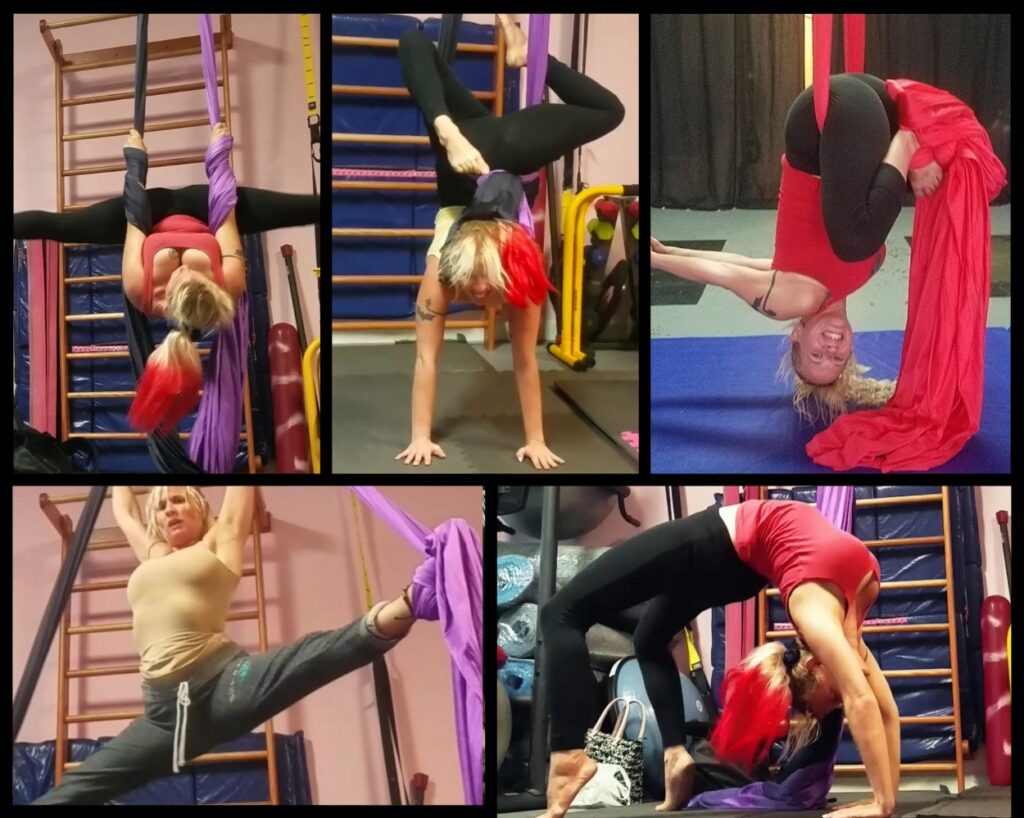
Silk Aerial training, also known as aerial silks, is a captivating discipline. Practitioners use two long, high-strength fabric panels to climb, wrap, and twist their bodies into elegant poses and gravity-defying drops.
Watch me train in the video below.
It is a full-body workout that builds strength, coordination, and flexibility. But beyond the physical benefits, silk training is an artistic expression that emphasizes fluid movement and performance.
Physical training:
- Core strength
- Upper body strength
- Grip power
- Flexibility
- Coordination
- Balance
- Spatial awareness
Performance training: While suspended from the ceiling, the performer combines acrobatics, dance, and strength to awe audiences.
Beginners typically start by learning basic foot locks and ground-level climbs, gradually progressing to more complex sequences and drops. It’s a rewarding pursuit that builds both physical resilience and mental confidence as you learn to trust the fabric and your own strength.
I took a break from training, and when I returned I had a funny blooper captured in the video below.
Results: Before doing silks I had very weak upper body strength. After just 2 months of training I went from 110 to 120 pounds. It was all muscle gain, but I also lost a lot of fat and went down 2 pant sizes.
Contortion Training
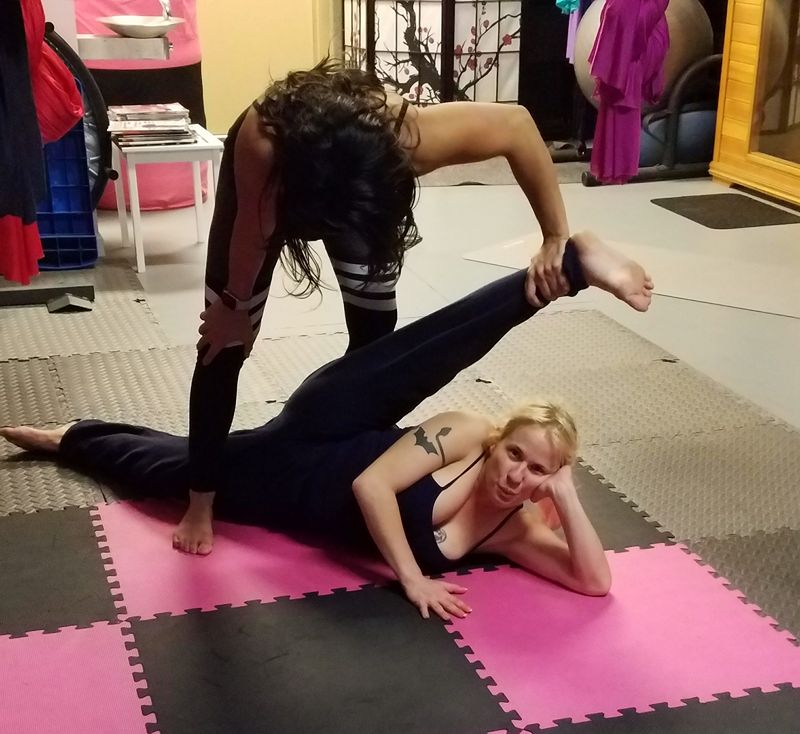
Contortion training, also called stretch training, is an excellent way to improve flexibility. However, please be aware that it’s a bit rougher on your limbs than yoga or Pilates. At times, it defines the expression, “no pain, no gain.”
My experience: When I was working with a stretch coach, I often woke up at night with muscle pain. I didn’t experience any physical injuries. In fact, I believe my extreme flexibility training has made my body much more resilient.
I have curated a culmination of cunning contortionist skills. You can see my flexibility on display in my Acrobatic Harley Quinn Cosplay and my Pocket Pretzel Back Bend.
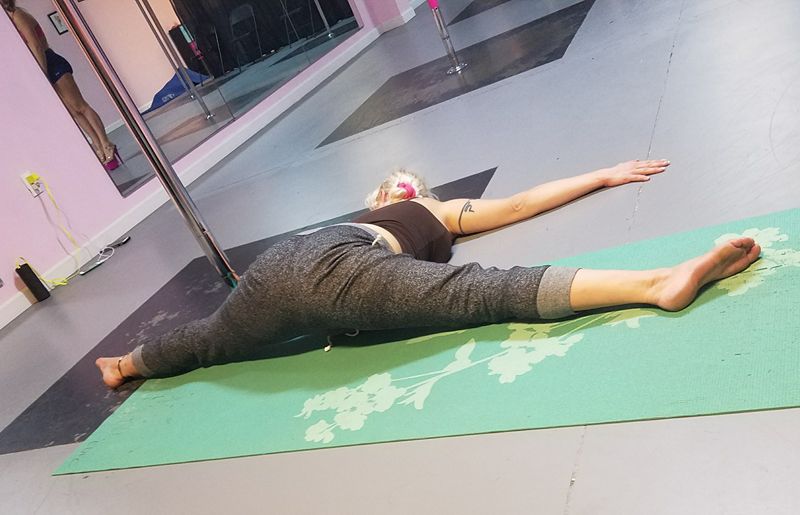
Contortion vs. Yoga & Pilates: While basic stretching aims for a healthy range of motion, contortion focuses on “active flexibility”—the ability to use your muscles to pull yourself into deep positions called hyper-extending.
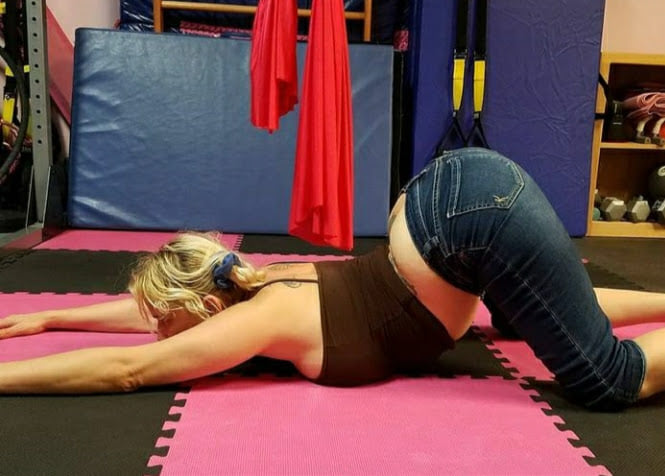
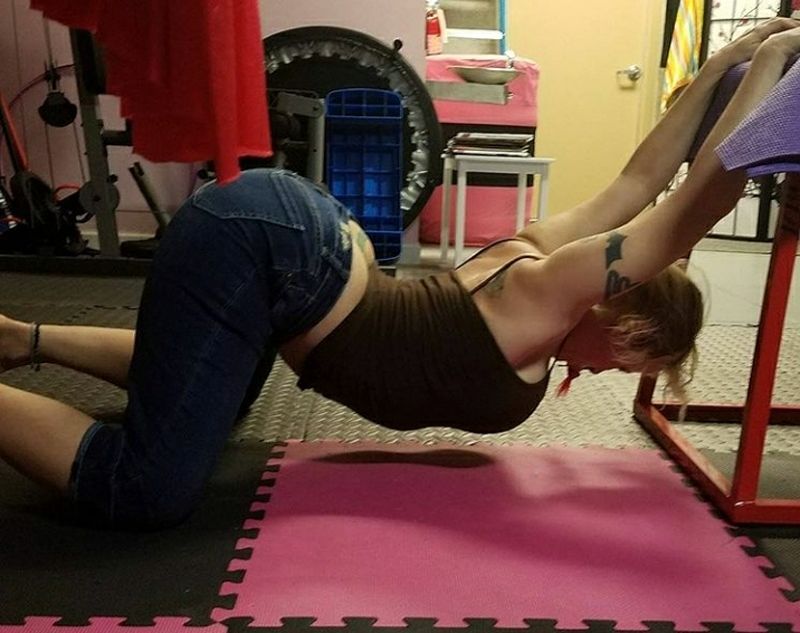
Aerial connection: Contortion and aerial training go hand in hand. For an aerialist, it’s crucial because it builds the protective strength around your joints (especially the shoulders and spine) needed to hold those breathtaking shapes while suspended in the air. On the flip side, training on the silks improves your flexibility leading to faster results in contortion.
Pec Popping
Being the pec pop queen, I’m often asked the best way to build up pectoral strength. My response is always silk aerial training.
Pec popping, also called pec flex or pec dancing, is the rhythmic, rapid contraction and relaxation of the pectoral muscles. It creates a visual jumping or bouncing effect in the chest, displaying an advanced mind-muscle connection.
Watch me pec pop in the video below.
The pec pop performer isolates each chest muscle independently. While often used as a fun trick, it actually requires significant neurological control and muscle density to execute clearly and on command.
It isn’t simply about raw strength; it involves “pulsing” the muscle, often in sync with a beat or for dramatic effect during a pose. For those in high-intensity physical disciplines like aerial arts or acrobatics, this skill is usually a natural byproduct of the intense functional chest and shoulder work required for stabilization and lifting.
Check out more of my pec pop performances:
- The 8 Best Georgia Pec Pec Pop Videos
- Pec Popping to Waylon Jennings
- Watch the Most Powerful Space Laser Pecs!
Why Do Circus Flexibility Training?
There are 3 main reasons why I enjoy circus training—the workout, the art, and the tricks.
1. It’s a 3-D Workout
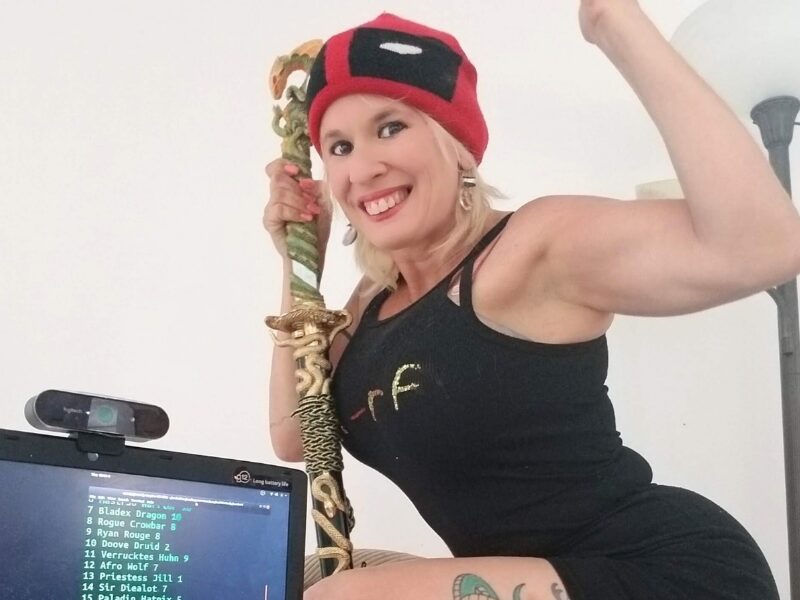
Circus training challenges the body in three dimensions:
- Space: Most fitness happens on the floor, but circus training takes you into the air.
- Stability: It redefines your relationship with gravity.
- Isolation: When I’m pushing my limits on the silks or floormats, I’m building the Female Muscle Control that makes my pecs pop.
2. It’s an Art Form
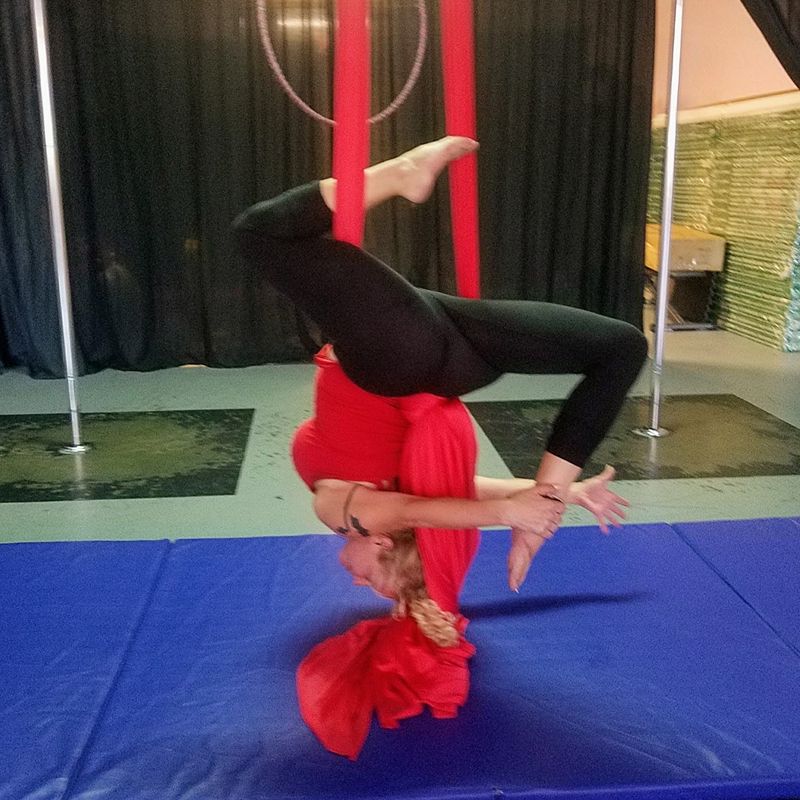
Aside from building strength and flexibility, circus training treaches you to use grace, strength, and creativity to make visual art.
3. I Love Doing Tricks
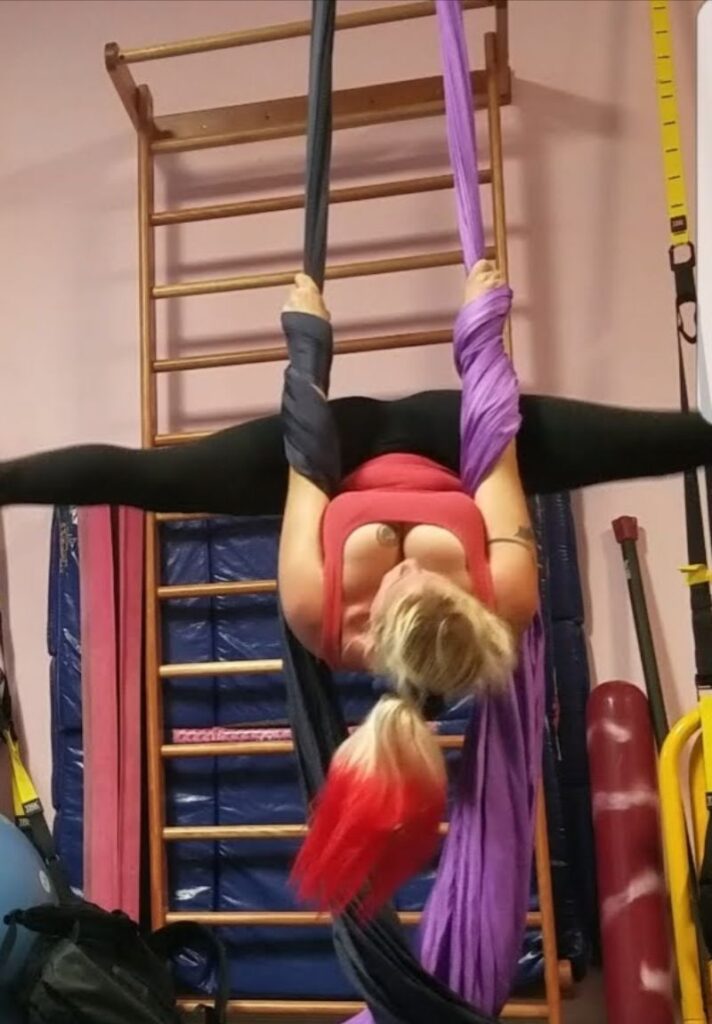
It’s really fun to do tricks. I’d much rather make aerial art than get bored on a treadmill.
Flexibility is Earned, Not Given
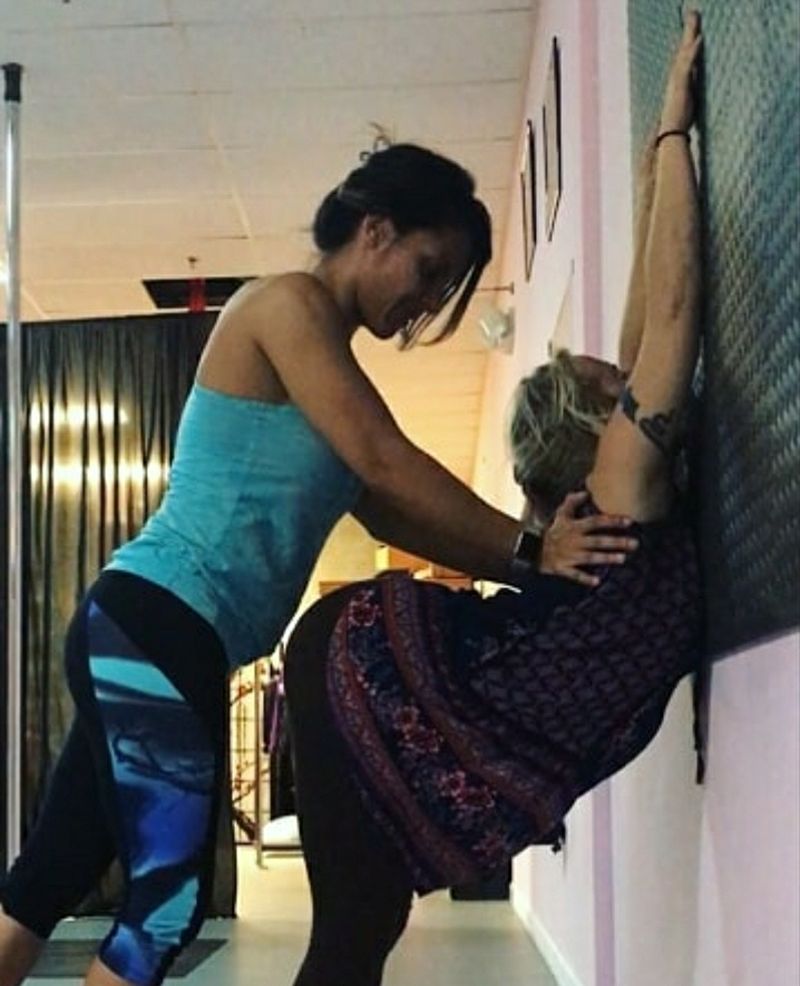
There’s a common misconception that you’re either born flexible or you aren’t. While genetics play a role, true circus-level flexibility is a product of consistent, often grueling, work. For me, staying “freaky” means:
- Active Recovery: It’s not just about stretching; it’s about maintaining strength at the end of my range of motion.
- Aerial Conditioning: Silks aren’t just for show—they are a full-body workout that demands extreme core stability and grip strength.
- Mind-Muscle Connection: Whether I’m popping my pecs to a country beat or holding a handstand, it’s all about knowing exactly how to engage every fiber.
So, the next time you see a video of me doing something that looks “impossible,” just know that I work hard to be this freaky.
Fit Over 40: Defying the Standard
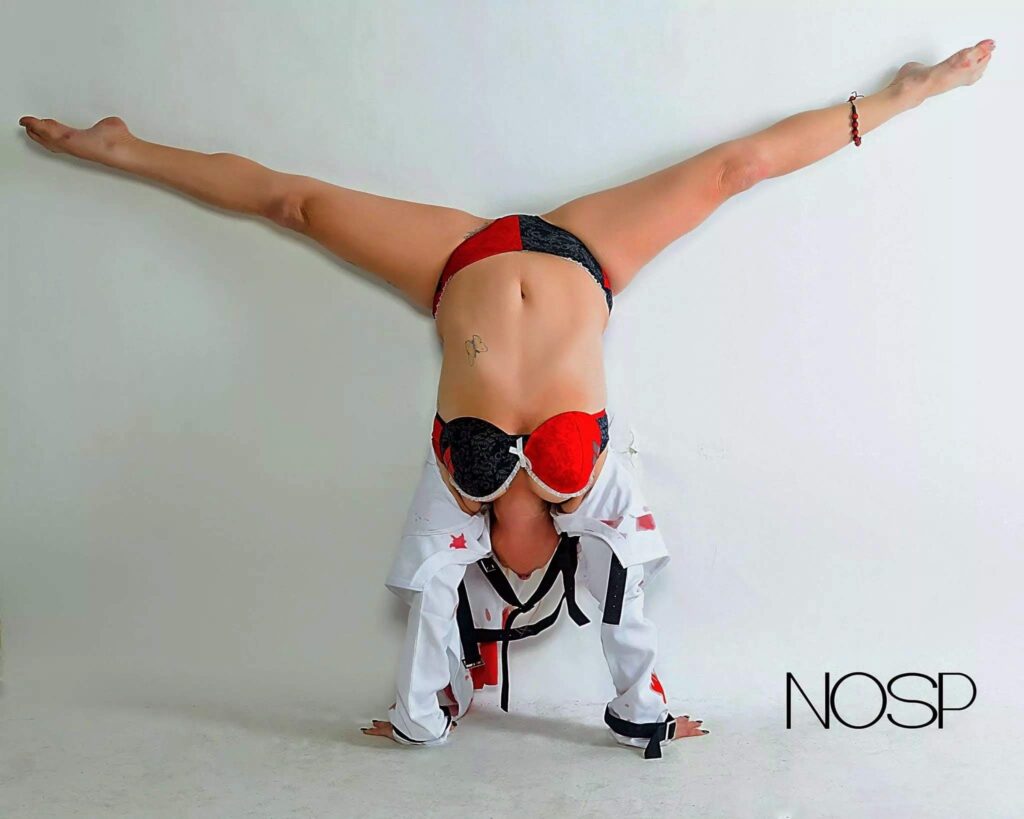
A big part of my journey is proving that your 40s aren’t the beginning of the “slow down.” Being Fit Over 40 means training smarter.
I work hard to stay this mobile because it’s the foundation for everything else I do. It keeps me agile, it keeps me strong, and—let’s be honest—it’s a lot of fun to shock people with what my body can do.
About Me: Queen Daisy Chain
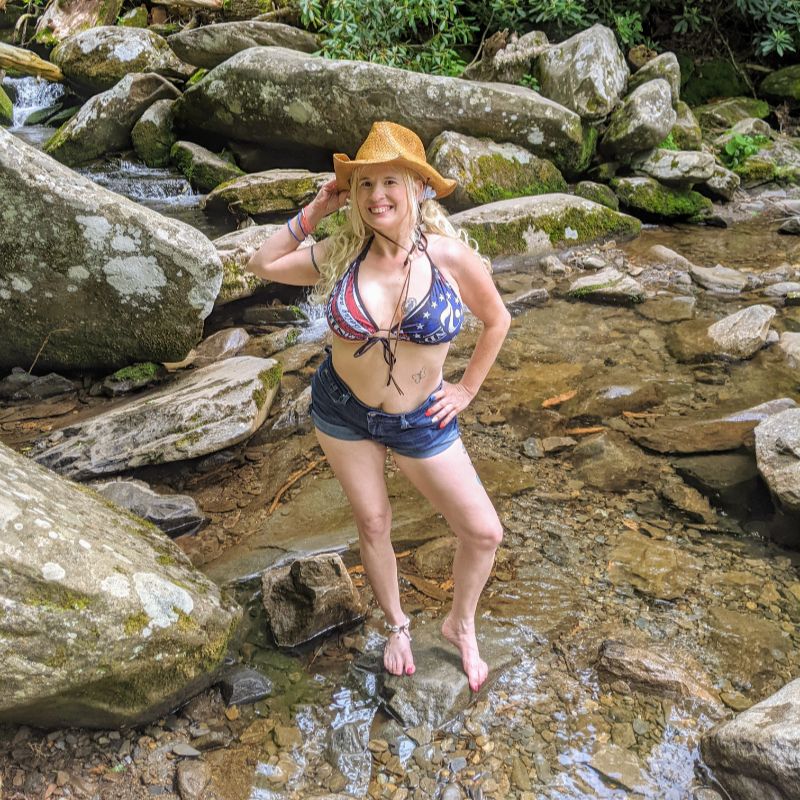
- Height: 4’11”
- Religion: Judaism
- Favorite foods: Lamb loin chops, fillet mignon, dates, goat cheese, cashews
I’m a writer, flexibility enthusiast, and pec pops queen.
Follow Me:
Disclaimer: I am a performance artist, not a medical professional. Always consult a doctor before starting extreme flexibility or aerial training.