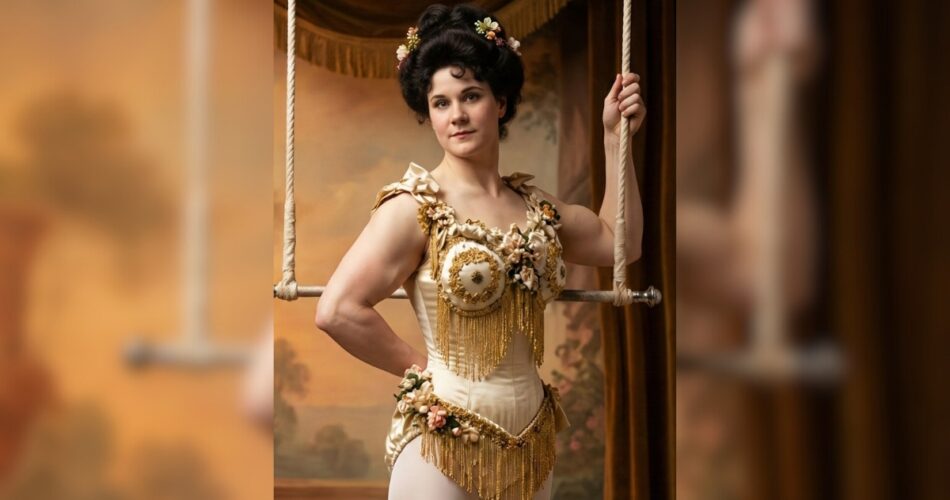
In the world of performance art, few figures stand as prominently as Charmion (born Laverie Vallee). She revolutionized the stage by blending elite athleticism with a daring, expressive display of physical strength.
Decades before the modern Female Muscle Control (FMC) subculture took root on social media, Charmion was already mastering the “muscle dance” and challenging societal norms.
In this article:
Profile of a Pioneer
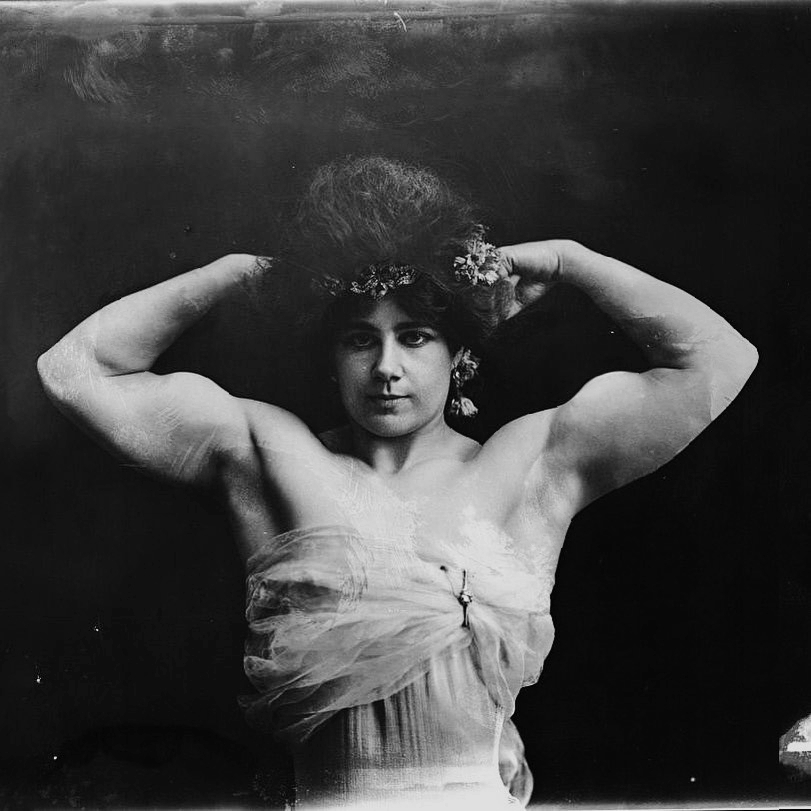
- Real Name: Laverie Vallee (née Cooper)
- Years Lived: 1875 – 1949
- Height: 5’1″
- Weight: 115 – 130 pounds
- Origins: Sacramento, California
Like many of the historical FMC Queens, Charmion earned fame by performing at the circus.
The “Trapeze Disrobe” and the Edison Film
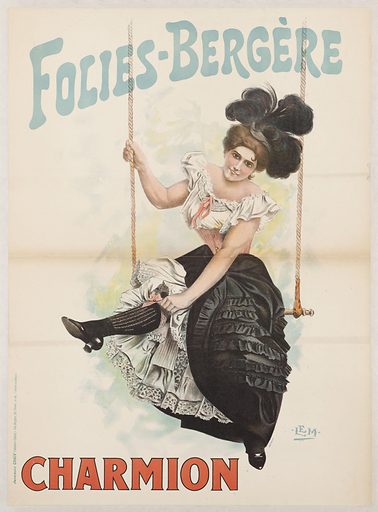
Charmion’s most legendary act, known as the “Trapeze Disrobe,” debuted on Christmas Day in 1897 at Koster & Bial’s vaudeville theatre in New York City.
The performance began with her entering the stage in full, restrictive Victorian street attire. As she ascended the trapeze and began her aerial maneuvers, she would systematically remove her layers—hat, jacket, skirt, and corset—all while suspended in mid-air.
This act was so culturally significant that it caught the eye of Thomas Edison, who filmed a version of it on November 11, 1901. By the end of the performance, she was clad only in her professional acrobat leotards, revealing a physique that was considered revolutionary for a woman of that era.
The FMC Talent: The “Muscle Dance”
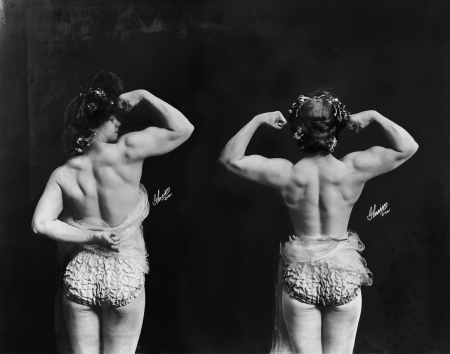
While the disrobing act provided the spectacle, the true art lay in Charmion’s muscle control. She was famous for combining her aerial work with a “muscle dance,” where she would purposefully flex her back and shoulders while suspended.
Biologically, this was a display of high-level neuromuscular isolation. While many athletes of the time focused on static strength, Charmion utilized muscle ripples and rhythmic contractions to highlight her definition.
Critics and fans alike noted her “Hercules” strength and her ability to make her muscles “jump” in time with her performance, a clear historical precursor to the rhythmic “pec pops” and abdominal rolls seen in today’s FMC community.
Legacy and Modern Impact
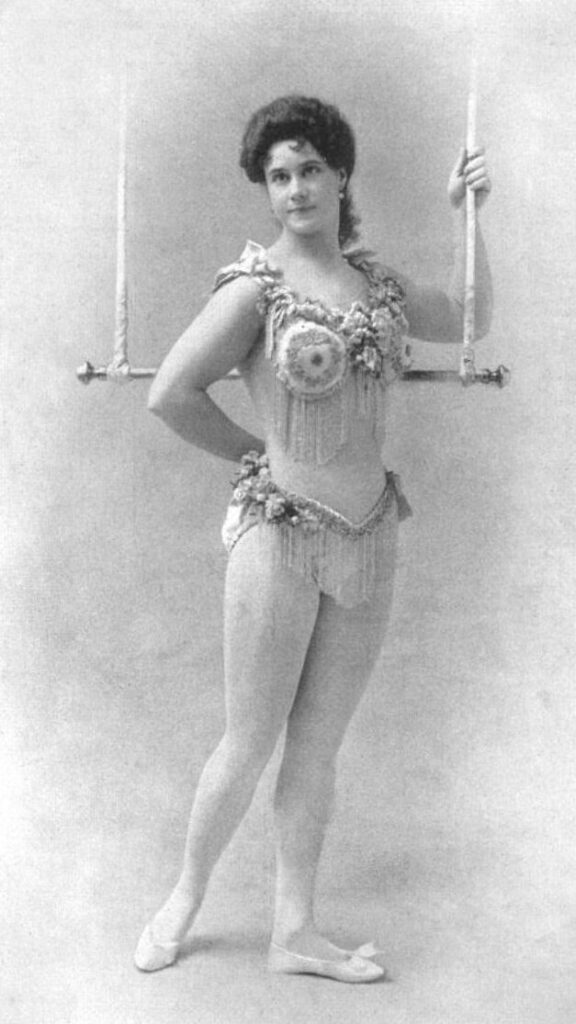
Charmion was more than just an entertainer; she was an icon who used her stage presence to promote “Physical Culture”—the idea that women should aspire to be physically active, strong, and autonomous.
In an era where the “frail” woman was the ideal, she proudly bragged about her muscle gains, famously stating she was “all muscles and bumps”.
Today’s performers, including Queen Daisy Chain and Queen Candy Kane, continue the legacy of this “muscular marvel”. By combining technical muscle isolation with modern content strategy and artistic flair, they echo Charmion’s original mission: proving that strength and femininity are not only compatible but can be woven into a breathtaking form of performance art.
FMC FAQ
1. What is Female Muscle Control?
In simple terms, Female Muscle Control (FMC) is when a woman is able to isolate and control specific muscle movements. Examples include pec popping and abdominal rolls.
2. Who are the FMC pioneers?
In addition to Charmion, Female Muscle Control pioneers include:
- Katie Sandwina used FMC to make her long 6’1″ body look like artistic perfection.
- Vulcana was famous for isolating her back muscles during iron bending acts.
3. Do any Bible verses support muscle development?
Yes, there are Bible verses that encourage women to develop physical strength.
For example:
I will praise You, for I am fearfully and wonderfully made; marvelous are Your works.
Psalm 139:14
The Featured image (on top of the article) was generated by Gemini AI to recreate Charmion’s likeness in high definition based on historical reference photos.”