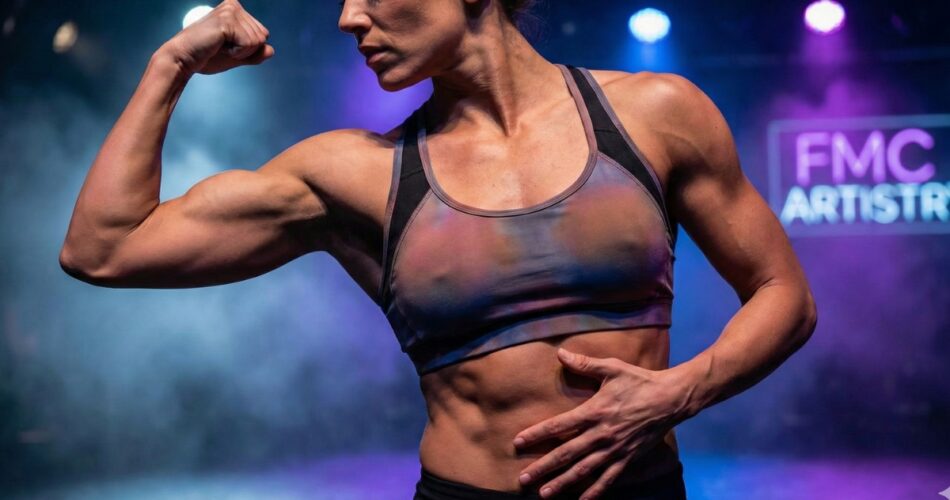
The fitness world is vast, but few niches are as visually striking and technically precise as Female Muscle Control (FMC).
FMC focuses on the art of isolation. It’s the ability to flex, twitch, and ripple specific muscles on command, often in sync with music.
What is FMC:
- Simple definition
- Scientific definition
- Example
- FMC Subculture
- Common muscles controlled
- Popular FMC Performers
Female Muscle Control: The Simple Meaning
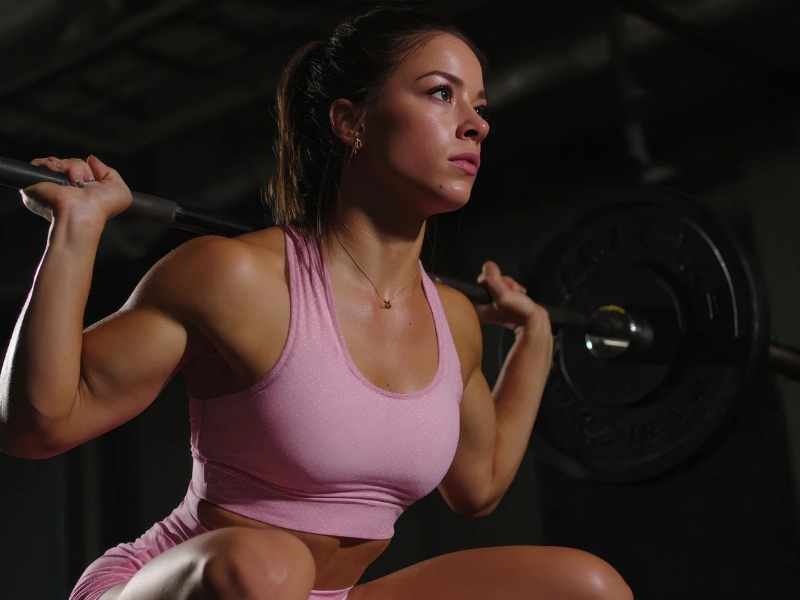
Let’s break it down:
- Female: A biological woman
- Muscle Control: The ability to voluntarily contract and relax specific muscles or muscle groups without moving the rest of the body.
It’s the dance of the muscles. Think of it like a drummer hitting a beat, but instead of using sticks, the performer uses their own anatomy to create a visual rhythm.
What is Female Muscle Control Biologically?
Biologically, FMC is an advanced display of neuromuscular control. Every movement in our body starts with a signal from the brain sent through the central nervous system to the motor units within a muscle.
Motor Unit Recruitment: Most people flex an entire limb to move. FMC performers have trained their brains to recruit specific motor units within a single muscle belly.
Isolation: By bypassing the “overflow” of energy to surrounding muscles (synergists), a performer can make one muscle “pop” while the others remain soft.
Muscle Tonus: Successful FMC usually requires a certain level of muscle tone and low body fat percentage, which makes the contractions visible to the naked eye.
FMC Example: Pec Pop
What is the FMC Online Subculture?
FMC has found a thriving home on social media platforms like Instagram, Facebook, and YouTube. The community is built around performance and aesthetics, where creators share muscle dances, tutorials, and pec pops.
The videos are often set to high-energy tracks, ranging from club beats to heavy metal, and even outlaw country.
The FMC community is a space where strength meets femininity. The focus on the incredible things the human body can do rather than just how it looks in a still photo.
Common Muscles Controlled by Female Performers
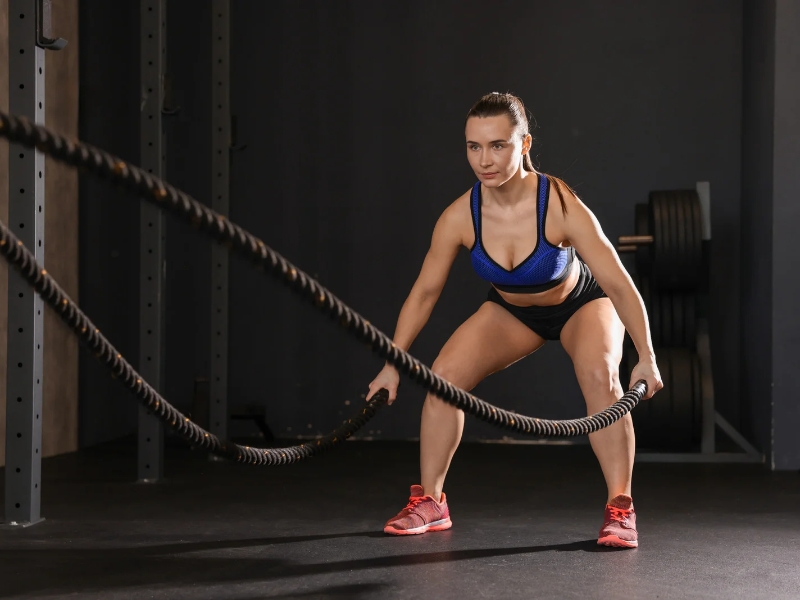
While any skeletal muscle can technically be controlled, certain areas are more popular because of their visibility and “pop” factor:
- Pectorals (The Pec Pop): This is the “gold standard” of FMC. Because the chest muscles are large and flat, the “bounce” or “pop” is highly visible and can be easily timed to a drum beat.
- Abdominals (The Stomach Roll/Vacuum): Controlling the transverse abdominis allows for “rolling” movements or deep vacuums, showcasing incredible core strength.
- Biceps: A classic flex, but in FMC, the focus is on the “peak” of the bicep “jumping” or pulsing rather than just a static hold.
Popular FMC Performers
The FMC scene is driven by talented individuals who have spent years mastering their mind-muscle connection. Here are some of the most prominent names currently leading the culture.
Queen Daisy Chain
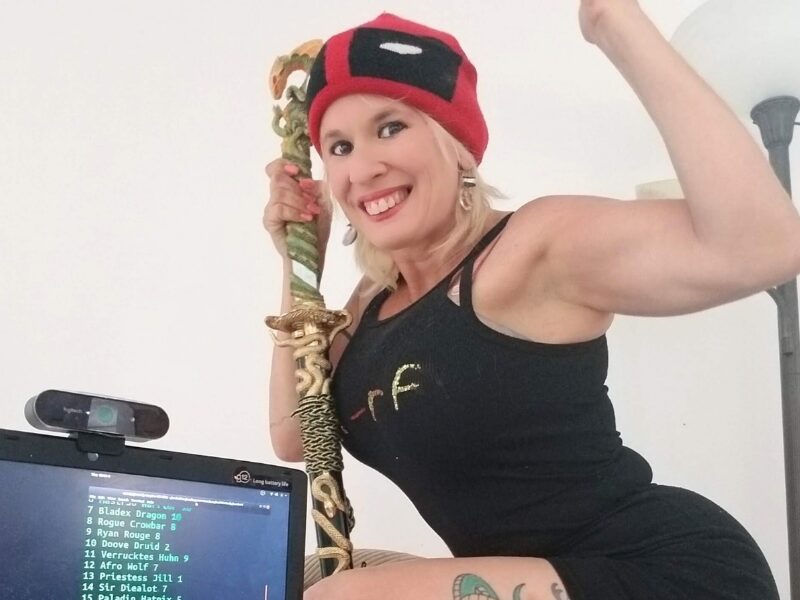
- FMC Talent: Pec Popping
- Height: 4’11”
- Watch Daisy’s Videos
- Follow Daisy
Queen Candy Kane

- FMC Talent: Pec Popping
- Height: 4’10”
- Watch Candy’s Videos
- Follow Candy
Lada Lyumos

- FMC Talent: Abdominal Muscle Ripple
- Height: 5’8″
- Follow Lada
Charmion (Historical FMC Queen)
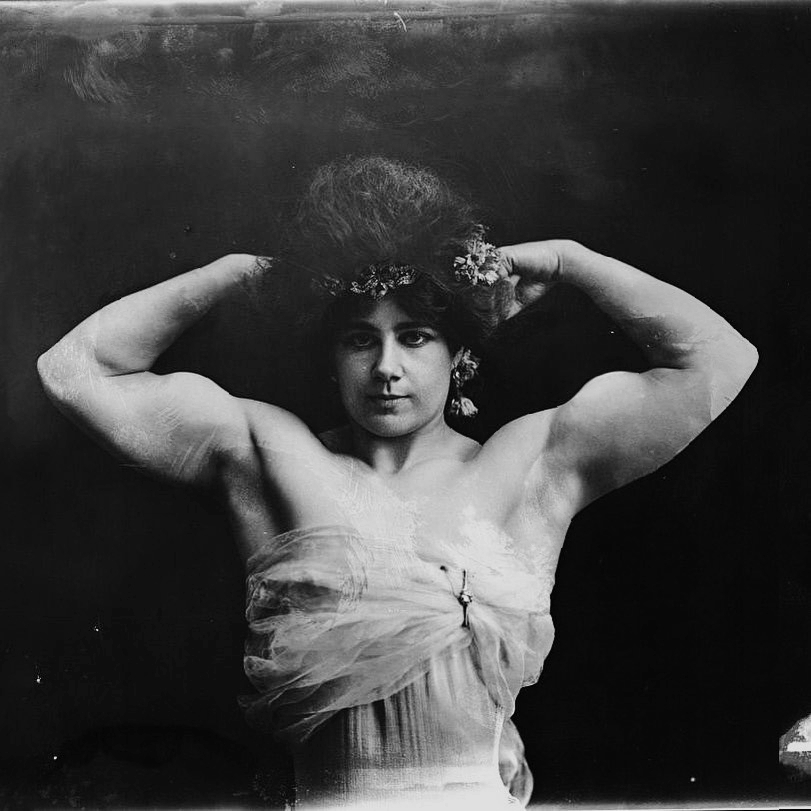
- FMC Talent: Flexing shoulders & back while suspended on the Trapeze.
- Height: 5’1″
- Lifespan: 1875 – 1949
As one of the earliest FMC icons, circus performer and strongwoman Charmion is the Hank Williams of the muscle mommy community. She’s best known for disrobing whilst suspended in air.
FMC FAQ
1. What are the best synchronized pec pop videos by women?
The best synced pec pop videos include:
2. Who are the FMC pioneers?
The women who pioneered the Female Muscle Control movement include: